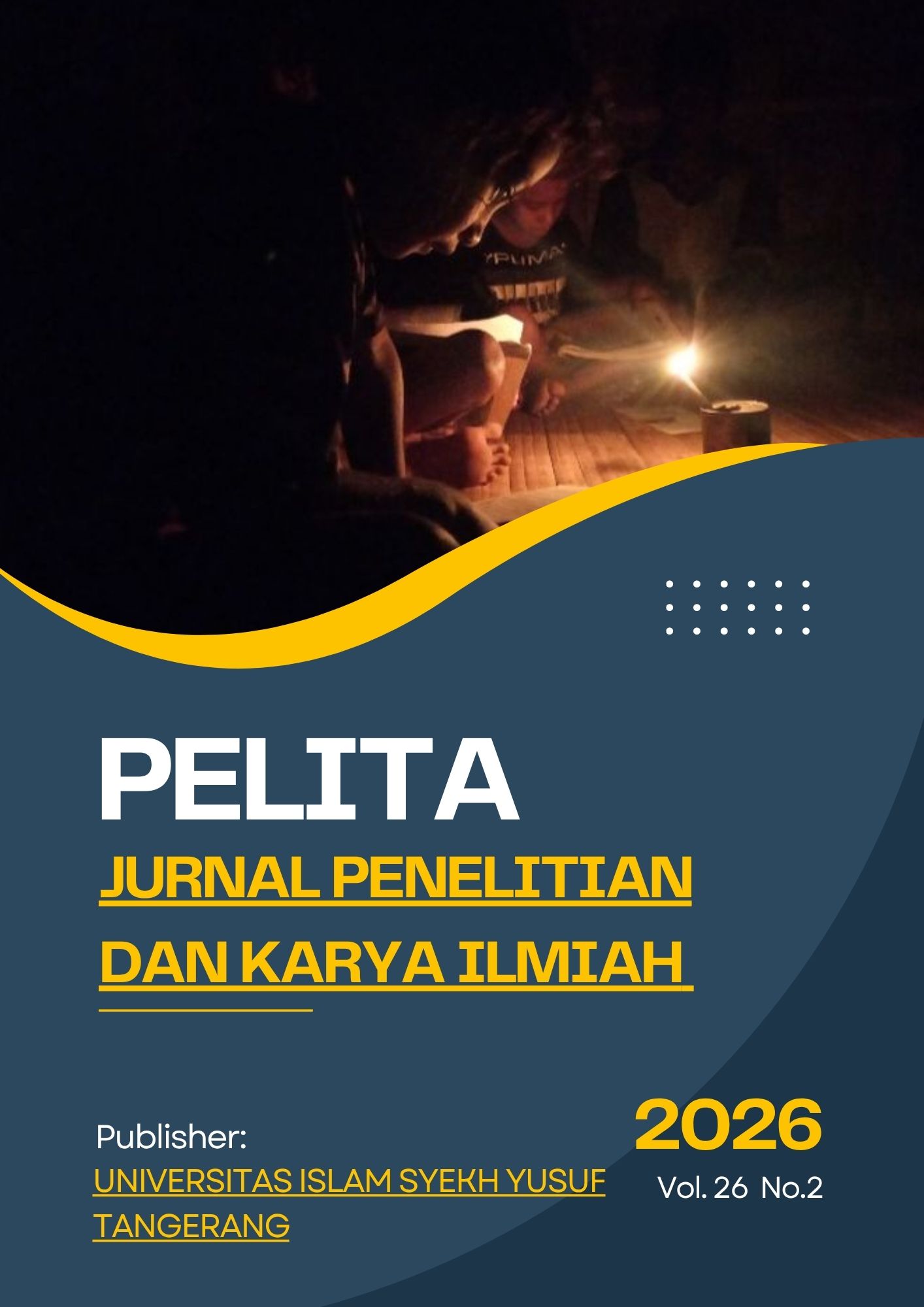
Analisis Framing Pemberitaan Penyalahgunaan Teknologi Kecerdasan Buatan Pada Foto Selebritas di Detik.com
DOI:
https://doi.org/10.33592/pelita.v26i2.8204Keywords:
Artificial Intelligence, Privacy Issues, Media Framing, Digital Ethics, Celebrities, Artificial Intelligence, Isu Privasi, Framing Media, Etika Digital, SelebritasAbstract
Advances in artificial intelligence (AI) technology have brought numerous conveniences to everyday life, particularly in the communications and digital content sectors. However, amidst these advantages, crucial issues have arisen regarding the misuse of these tools, particularly regarding the violation of personal privacy. One case of AI abuse that has captured public attention is the editing of images of famous figures to create imaginary images without their consent. This study focuses on how the media outlet Detik.com frames news related to the case of AI abuse in celebrity photos.The approach used is qualitative through framing analysis according to Robert Entman's model, encompassing four main aspects: problem identification, root cause analysis, ethical evaluation, and suggested solutions. Furthermore, the media advocates for strengthened regulations and increased public awareness to minimize the negative risks of technological advancements. Therefore, this study demonstrates the centrality of media framing in shaping public opinion regarding the moral challenges of implementing AI in virtual environments. The media also advocates for the establishment of legal regulations and increased public awareness to prevent the negative consequences of technological innovation. Therefore, this study strengthens the role of news framing in influencing public views on the ethical dilemmas of AI use in cyberspace
References
Creswell, J. W. (2014). Research design: Qualitative, quantitative, and mixed methods approaches(4th ed.). Sage Publications
Denzin, N.K.,& Lincoln, Y.S. (2018). The SAGE handbook of qualitative research(5thed.). Sage Publications.
Detik Jatim. (2025). Waspadai bahaya tren edit foto AI yang bisa picu disinformasi. Detik.com
DetikJabar. (2024). Sisi bahaya edit foto bareng idola menggunakan AI. Detik.com
DetikSumut. (2024). Ramai seruan hentikan edit foto seleb jadi objek fantasi lewat AI. Detik.com .
Entman,R.M.(1993)., Framing: Toward clarification of a fractured paradigm. Journal of Communication, 43(4), 51?58.
Flew, T.(2021). Understanding global media.
https://doi.org/10.1111/j.1460-2466.1993.tb01304.x
McQuail, D. (2010). Teori komunikasi massa McQuail (edisi ke-6).
Moor, J. H. (2005). Why we need better ethics for emerging technologies. Ethics and Information Technology, 7(3), 111?119. https://doi.org/10.1007/s10676-006-0008-0
Nasrullah, R. (2017). Media sosial: Perspektif komunikasi, budaya, dan sosioteknologi. Simbiosa Rekatama Media.
Palgrave Macmillan.
Pavlik, J. V. (2013). Innovation and the future of journalism. Digital Journalism, 1(2), 181?193. https://doi.org/10.1080/21670811.2012.756666
Sage Publications.
Shoemaker, PJ, & Reese, SD (2014). Mediasi pesan di abad ke-21: Perspektif sosiologi media (edisi ke-3). Routledge.
Silverstone, R. (2007). Media dan moralitas: Tentang munculnya mediapolis . Polity Press.
Westin, AF (2020). Privasi dan kebebasan . IG Publishing.
Zuboff, S. (2019). Era kapitalisme pengawasan . PublicAffairs.
Downloads
Published
How to Cite
Issue
Section
License
Copyright (c) 2026 Sania Agustina, Dea Despita, Sutaryat, Muhamad Ramdani

This work is licensed under a Creative Commons Attribution-NonCommercial-ShareAlike 4.0 International License.

Pelita : Jurnal Penelitian dan Karya Ilmiah this site and metadata is licensed under a Creative Commons Attribution-NonCommercial-ShareAlike 4.0 International License